8 Italian Cheese Varieties to Try Beyond Parmesan and Mozzarella
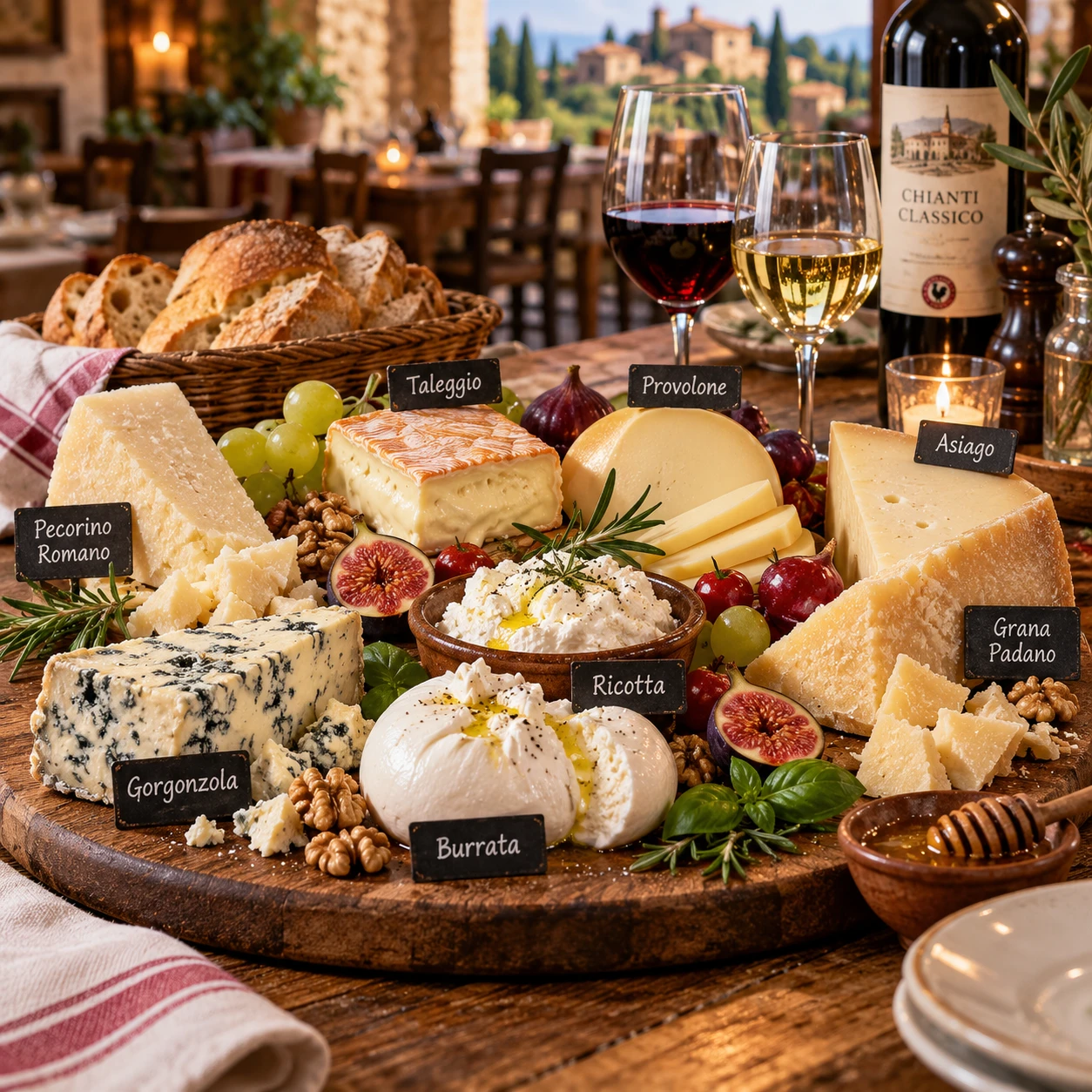
Italian cheese is often introduced through Parmesan and Mozzarella, but those familiar favorites are only part of the story. Across Italy, regional cheeses range from salty, firm wheels made for grating to soft, mild cheeses best enjoyed by the spoonful.
Knowing a few varieties makes it easier to choose a pasta topping, order a cheese course, or build a board with contrasting flavors. Here are eight cheeses to look for, along with practical ways to enjoy them.
Why Italian cheese goes beyond the familiar favorites
Italian cheese varieties differ in milk, texture, aging, and flavor, so they suit different dishes and occasions. Exploring regional cheeses helps you find options that are sharp, creamy, tangy, or boldly savory.
Italy’s food traditions are strongly regional, and cheese reflects that variety. Some cheeses are aged until firm and concentrated; others stay fresh and moist or develop a soft, aromatic rind. Even cheeses in the same broad style can behave differently in a recipe.
A useful way to choose is to think in three dimensions: texture, intensity, and use. A hard, salty cheese can season pasta with just a little grated over the top. A fresh cheese may add richness but need a lighter hand with salt. A soft washed-rind cheese can be the centerpiece of a board rather than a background ingredient.
At a restaurant, ask how a cheese is served and what it contributes to the dish. That question is often more helpful than asking whether it tastes like a cheese you already know.
Bold and aged cheeses: Pecorino Romano and Grana Padano
Pecorino Romano is sheep’s-milk cheese with a firm texture and pronounced salty, savory flavor, while Grana Padano is a granular, aged cow’s-milk cheese with a rounder, milder taste. Both grate well, but they are not interchangeable in every dish.
Pecorino Romano brings a sharp edge to pasta and is especially familiar in Roman cooking. Its saltiness can carry a sauce, so taste before adding extra salt. It also works in small shavings over roasted vegetables or a simple salad, where its assertive flavor stands out.
Grana Padano has a firm, crumbly texture and a savory, nutty profile. Grate it over risotto or baked vegetables, or serve thin shards with pears and a little honey. It can suit dishes where you want an aged-cheese savor without Pecorino’s stronger salty bite.
For cooking, add grated cheese gradually and taste as you go. Heat can make cheese clump or turn a sauce oily, so many pasta sauces benefit from tossing the cheese with the pasta off the heat and loosening the mixture with a little cooking water.
Soft and creamy choices: Ricotta and Burrata
Ricotta is light, moist, and gently milky, while Burrata has a delicate outer pouch filled with creamy curds. Both are mild Italian cheeses, but Burrata is richer and best served fresh, whereas ricotta is versatile in both savory and sweet dishes.
Ricotta works in fillings for ravioli and other pasta, layered into baked dishes, or spooned onto toast with herbs and olive oil. Its mild flavor makes it a good partner for ingredients with more character, such as lemon zest, black pepper, roasted tomatoes, or greens. Drain it if a recipe needs a thicker filling; excess moisture can make pasta or pastry soggy.
Burrata is most enjoyable when its creamy center can be appreciated. Serve it at room temperature with ripe tomatoes, grilled bread, or seasonal fruit, and finish with olive oil and a little salt. It can top a salad or a warm vegetable dish, but avoid cooking it for long: the texture is part of its appeal.
For a simple contrast, pair ricotta with crisp, peppery greens or Burrata with juicy tomatoes and toasted bread. Their mildness is a strength, but a dish can feel flat if every other ingredient is equally delicate.
Blue and washed-rind cheeses: Gorgonzola and Taleggio
Gorgonzola is a blue-veined cheese with a savory, tangy character, while Taleggio is a soft washed-rind cheese known for its creamy interior and pronounced aroma. Both can be approachable when served in modest portions with balancing foods.
Gorgonzola ranges from softer and milder to firmer and more intense, so ask which style a restaurant is using. A little can enrich a risotto or create a creamy pasta sauce; on a cheese board, pair it with pear, toasted nuts, or a spoonful of fruit preserve. Its salt and tang can dominate delicate ingredients, so use it as an accent rather than adding it without tasting.
Taleggio has a supple, creamy texture and a fragrant rind. The aroma may seem stronger than the flavor, which is often mellow and savory. Try it with crusty bread, grilled polenta, or roasted mushrooms. In a warm dish, it melts readily, making it useful in a baked pasta or a simple toast.
If you are new to bold cheeses, taste a small piece alongside bread or fruit before deciding whether you like it. The pairing can soften the first impression without hiding the cheese.
More varieties to know: Provolone and Asiago
Provolone ranges from mild and smooth to sharper and more savory, while Asiago can be softer when younger or firmer and more concentrated with age. Their range makes them useful both at the table and in cooked dishes.
Provolone is often easy to enjoy sliced with bread, cured meats, or olives. A younger style melts well in sandwiches and baked dishes; a more aged version can bring a sharper flavor to a cheese board. Ask which style is being served, since the name alone does not tell you exactly how mild or firm it will be.
Asiago also changes with age. A younger cheese tends to be supple and mild, while an aged one is firmer and more savory. Use younger Asiago in a sandwich or melted over vegetables, and shave or grate a firmer style over soup, pasta, or roasted potatoes.
These cheeses offer a practical middle ground: more character than a neutral melting cheese, but often less challenging than blue or washed-rind varieties. Pair them with bread, apples, or a few olives and let their different textures guide the selection.
How to choose and pair Italian cheeses
Choose Italian cheeses by matching their texture and intensity to the food: use aged cheeses for seasoning, fresh cheeses for richness, and bold cheeses for contrast. For a cheese board, include variety rather than several cheeses with the same flavor and feel.
A simple pairing framework is contrast, complement, and context. Contrast a salty cheese with sweet fruit; complement a nutty aged cheese with toasted nuts; and consider context by matching the cheese to the dish or the occasion. This keeps pairings intuitive without turning them into strict rules.
- For pasta: Grate Pecorino Romano or Grana Padano over the finished dish, or use Gorgonzola sparingly in a creamy sauce.
- For a cheese board: Combine a firm aged cheese, a soft cheese such as Taleggio, and a fresh option such as ricotta or Burrata. Add bread, pears or apples, and nuts.
- For bread and snacks: Try Provolone with olives, Taleggio with crusty bread, or ricotta with herbs and olive oil.
- For wine: Ask the restaurant for a pairing based on the specific cheese and wine list. Acidity, sweetness, and body can change how a pairing tastes, so there is no single wine match for every style.
One common misstep is serving every cheese straight from the refrigerator. Cold temperatures can mute aroma and make texture feel firmer, so let a portion sit briefly before eating, following the restaurant’s serving guidance. Another is pairing a powerful cheese with several equally intense ingredients; a plain piece of bread or fresh fruit can give your palate a clearer read.
What to try on your next restaurant visit
To try regional Italian cheeses at a restaurant, ask which varieties are available, how they taste, and whether they are served in a dish or as a cheese course. A small tasting portion is a low-pressure way to explore an unfamiliar style.
Be specific about what you enjoy. You might say, “I like firm, nutty cheeses; what would you recommend?” or “I’m curious about blue cheese, but I prefer a milder style.” The staff can then suggest Grana Padano or aged Asiago in the first case, or a gentler Gorgonzola in the second, if available.
If you are ordering a shared board, ask for a mix of textures and intensities rather than a list of names. For a meal, ask what the cheese does in the dish: Pecorino Romano may add salt and savory depth, while ricotta brings softness and richness. Knowing that role helps you decide whether the dish suits your taste.
Start with one unfamiliar cheese at a time and compare it with something you already enjoy. That makes it easier to notice the differences among Italy’s regional cheeses, and it gives you a useful starting point for your next visit.