How to Make Perfect Pasta Dough from Scratch: A Step-by-Step Guide
Why Fresh Pasta Dough Is Worth Making from Scratch
Fresh pasta dough produces a texture, flavor, and tenderness that dried pasta simply cannot replicate. Where dried pasta is engineered for shelf life and consistency, fresh dough is alive — elastic, silky, and responsive to your hands in a way that makes the cooking feel personal.
In Italian culinary tradition, making pasta by hand is not a weekend project. It is a skill passed down through generations, practiced weekly in home kitchens from Bologna to Palermo. The sfogline of Emilia-Romagna — women who have spent decades mastering the art of hand-rolled pasta — treat dough not as a recipe to follow but as a material to understand. That understanding is exactly what this guide aims to give you.
The difference between fresh and dried pasta goes beyond texture. Fresh pasta absorbs sauces differently, cooks in under three minutes, and carries the flavor of the eggs and flour in a way that feels like the dish itself. Once you've made it yourself, dried pasta becomes a backup option, not a preference.
The Ingredients You Need — and Why Each One Matters
The best pasta dough requires only two to four ingredients, but the choice of each one directly shapes the final result. Flour type, egg composition, and hydration ratio are not interchangeable — they are decisions with real consequences for texture and workability.
Flour: 00 vs. Semolina
00 flour (doppio zero) is finely milled soft wheat with a protein content of around 10–11%. It produces a smooth, pliable dough that rolls out easily and yields a delicate, tender pasta. This is the standard choice for egg-based pasta in northern Italy — tagliatelle, pappardelle, lasagne.
Semolina flour, milled from durum wheat, has a coarser texture and higher protein content (around 12–13%). It creates a firmer, slightly rougher dough that holds its shape under heat and pairs well with robust sauces. Southern Italian pasta traditions — orecchiette, cavatelli, spaghetti alla chitarra — rely on semolina mixed with water, no eggs required.
For a classic egg pasta dough, many professional kitchens blend the two: roughly 70% 00 flour to 30% semolina. The semolina adds bite and structure; the 00 keeps the dough smooth and workable.
Eggs: Whole Eggs vs. Yolks Only
Whole eggs add both hydration and structure. A dough made entirely with whole eggs is easier to work with and forgiving for beginners. Egg yolks only — the approach favored in Emilia-Romagna for rich tagliatelle — produce a more golden, luxurious dough with a silkier bite, but it requires more precise kneading because the reduced water content makes the dough stiffer.
A reliable starting ratio: 100g of flour to 1 large egg. For a richer dough, use 2 yolks plus 1 whole egg per 100g. Add a pinch of salt; a small drizzle of olive oil is optional but helps with elasticity and shelf life.
Step-by-Step: Mixing and Forming the Dough
To mix pasta dough, mound your flour on a clean work surface, create a well in the center, add your eggs, and gradually incorporate the flour from the inside out. This method gives you control over the dough's consistency before it comes together.
- Measure 200g of 00 flour (or your chosen blend) onto a wooden board or marble surface.
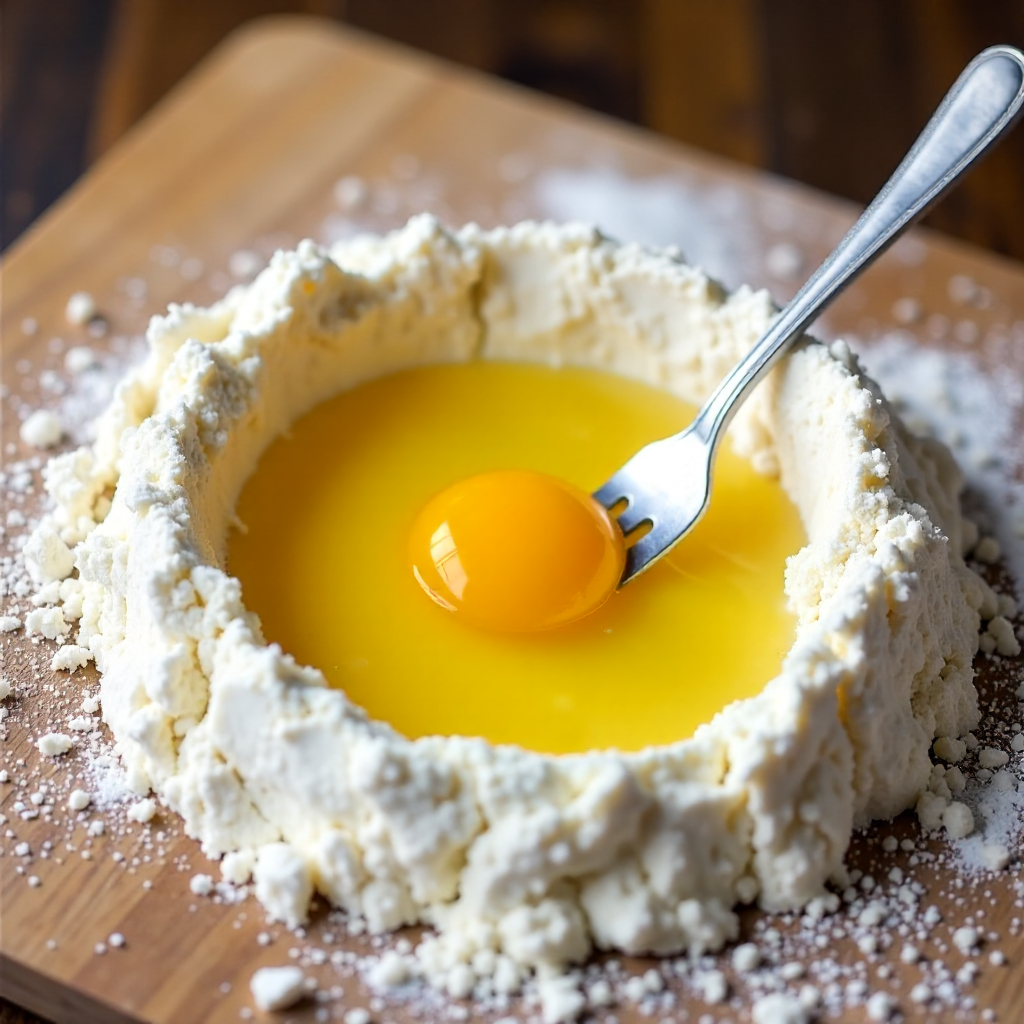
- Shape it into a mound and use your fingers to create a wide, deep well — like a volcano crater.
- Crack 2 whole eggs (or your chosen egg ratio) into the well. Add a pinch of fine salt.
- Beat the eggs lightly with a fork, then begin drawing flour from the inner walls of the well in small amounts. Work slowly — if the egg breaks through the walls, use your hands to contain it.
- Once the mixture is thick enough to handle, set the fork aside and begin working the dough with your hands, incorporating the remaining flour until a rough, shaggy mass forms.
- If the dough feels too dry and won't come together, add water one teaspoon at a time. If it's sticky, dust lightly with flour.
At this stage, the dough will look rough and uneven. That's normal. The transformation happens in the next step.
How to Knead Pasta Dough Properly
Proper kneading develops gluten — the protein network that gives pasta its structure and chew. For pasta dough, you need around 8–10 minutes of firm, consistent hand kneading to achieve a smooth, elastic result.
Use the heel of your hand to push the dough away from you, then fold it back, rotate a quarter turn, and repeat. The motion is rhythmic and deliberate. You're not punching or tearing — you're stretching and folding, building the gluten network gradually.
Watch for these sensory cues as you work:
- Minutes 1–3: The dough feels rough, dense, and slightly sticky. It may tear when stretched. This is expected.
- Minutes 4–6: The surface begins to smooth out. The dough becomes more cohesive and starts to resist your hands with a gentle spring-back.
- Minutes 8–10: The dough is smooth as leather, slightly tacky but not sticky, and springs back slowly when you press a finger into it. This is the target.
If the dough feels tight and fights back aggressively, it's telling you the gluten is fatigued. Stop kneading — rest is the solution, not more force.
The Resting Stage — Why You Should Never Skip It
Resting pasta dough — the Italian riposo — is not optional. After kneading, the gluten network is tense and contracted. Rolling the dough at this stage is a fight you will lose: it springs back, tears, and resists thinning.
Wrap the dough tightly in plastic wrap and leave it at room temperature for a minimum of 30 minutes. During this time, the gluten strands relax, moisture distributes evenly through the dough, and the texture softens noticeably. An hour is better. Two hours is better still.
After resting, the dough should feel noticeably softer and more pliable than when you wrapped it. Press it with a finger — it should indent easily and hold the impression. If it still feels tight, give it another 15 minutes.
For longer storage, refrigerate the wrapped dough for up to 24 hours. Cold slows gluten development further and deepens the flavor slightly. Bring it back to room temperature for 20–30 minutes before rolling.
Rolling and Shaping — From Dough Ball to Pasta
Rolling pasta dough can be done by hand with a mattarello (a long, thin Italian rolling pin) or with a pasta machine — both methods work, and each has advantages depending on what you're making.
Hand Rolling with a Mattarello
Divide the rested dough into portions roughly the size of a tennis ball. Flatten one portion with your palm, then begin rolling from the center outward, rotating the dough a quarter turn after each pass. The goal is even pressure across the entire surface — uneven rolling creates thin spots that tear during cutting or cooking.
For tagliatelle or pappardelle, roll to about 2–3mm thickness. For lasagne sheets or filled pasta, aim for 1–2mm — thin enough to see your hand through the sheet when held up to light.
Using a Pasta Machine
A pasta machine gives you more consistent thickness, which matters for delicate shapes. Start at the widest setting and pass the dough through several times, folding it in thirds between passes for the first few rounds — this is a secondary kneading that improves texture. Then work down through the settings progressively until you reach your target thickness.
Dust the dough lightly with semolina flour (not 00) as you work — semolina's coarser texture prevents sticking without making the surface gummy.
Troubleshooting Common Pasta Dough Problems
Most pasta dough problems have straightforward fixes once you understand what caused them. Here are the four most common issues and how to address each one.
Crumbly, dry dough that won't come together: The hydration ratio is off — usually too much flour relative to egg. Add water one teaspoon at a time, kneading after each addition, until the dough coheres. Next time, weigh your flour rather than measuring by volume.
Sticky dough that clings to the board: The dough has too much moisture, often from oversized eggs or humid conditions. Dust lightly with 00 flour and continue kneading. Avoid adding large amounts of flour at once — it throws off the ratio and creates a tough, uneven dough.
Dough tearing when you roll it: This is almost always a resting problem. The gluten hasn't relaxed enough. Rewrap the dough and rest for another 20–30 minutes before trying again. Tearing can also happen if you're rolling too aggressively — use steady, even pressure rather than forcing the dough thin quickly.
Dough springing back and refusing to stay thin: Same cause as tearing — insufficient rest. The gluten is still contracted. Patience is the fix, not technique.
Frequently Asked Questions
What is the best flour for homemade pasta dough?
00 flour (doppio zero) is the standard choice for egg-based fresh pasta. It produces a smooth, tender dough. For firmer pasta with more texture, blend 00 with semolina flour in a 70:30 ratio. Avoid all-purpose flour if possible — its inconsistent protein content makes the dough harder to predict.
Can I make pasta dough without a pasta machine?
Yes. A long, thin rolling pin (mattarello) and a smooth work surface are all you need. Hand rolling takes more practice to achieve even thickness, but it's the traditional method and produces excellent results. Many Italian cooks prefer it for wide noodles like pappardelle.
How long can fresh pasta dough be stored before use?
Wrapped tightly in plastic, fresh pasta dough keeps in the refrigerator for up to 24 hours. Beyond that, the eggs begin to affect the color and flavor. For longer storage, roll and shape the pasta first, then freeze it on a tray before transferring to a bag — frozen fresh pasta cooks directly from frozen in about 4 minutes.
What is the difference between egg pasta dough and semolina-water dough?
Egg pasta dough uses 00 flour and eggs, producing a rich, golden, tender pasta suited to cream and butter sauces. Semolina-water dough uses durum wheat semolina and water only — no eggs — yielding a firmer, chewier pasta that pairs well with tomato-based and vegetable sauces. Both are authentic Italian traditions; they come from different regions and culinary contexts.
Why does my pasta dough keep tearing when I roll it out?
Tearing during rolling is almost always caused by insufficient resting time. The gluten network is still tense and resists stretching. Rewrap the dough and rest it for at least 20 more minutes. If tearing persists, the dough may also be slightly too dry — a few drops of water worked in gently can help.