Seasonal Italian Cooking: Recipes for Each Month
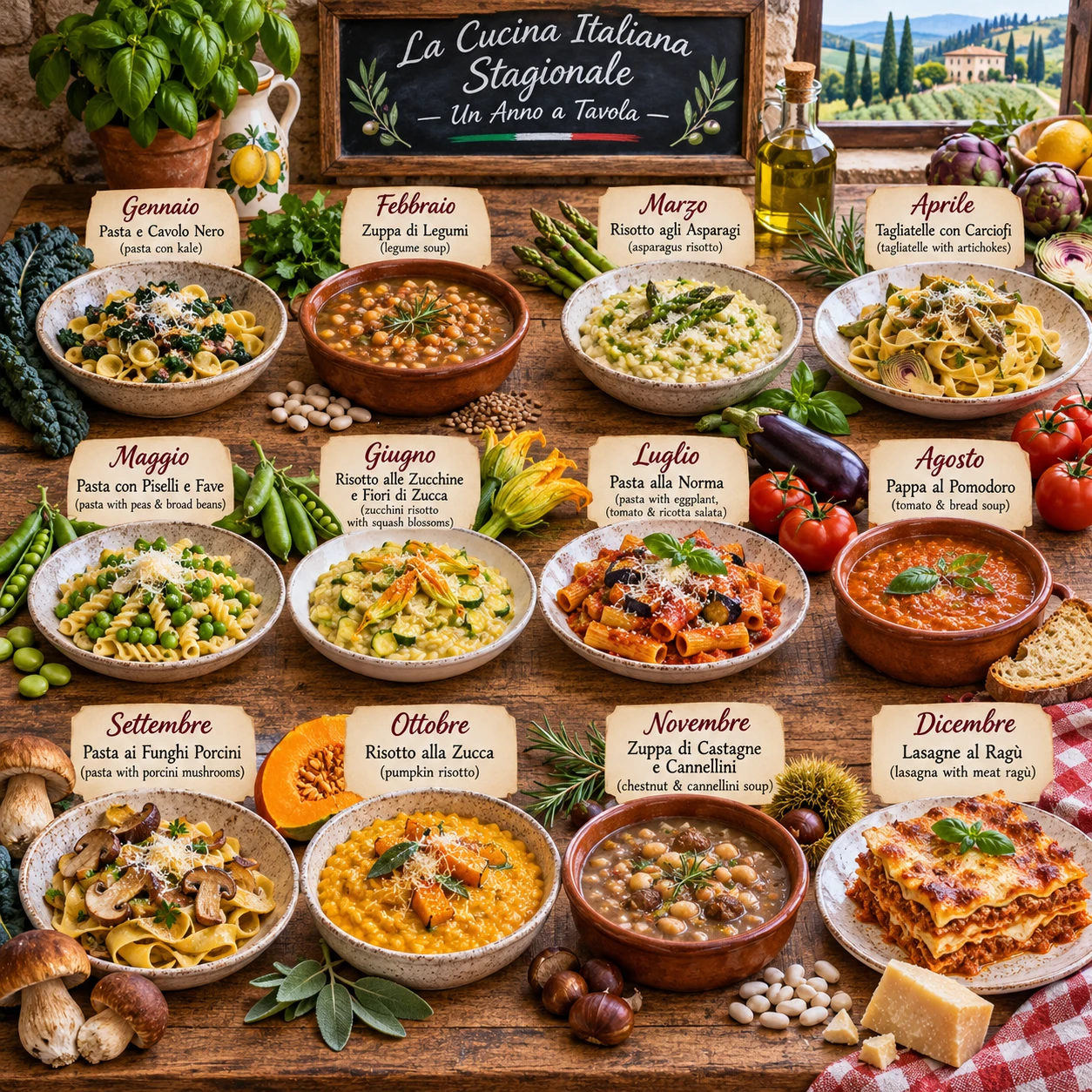
Italian cooking changes with the calendar. A winter bowl of bean soup, spring asparagus risotto, and late-summer tomato pasta each make the most of produce when it is at its best. The exact harvest varies by region and weather, but cooking seasonally gives home cooks a useful guide to fresher flavors and traditional dishes.
Why Italian Cooking Follows the Seasons
Seasonal Italian cooking means choosing ingredients when they are naturally harvested nearby and building dishes around their flavor and availability. Italy’s regional cuisines reflect local climates, crops, and traditions, so a seasonal menu in Sicily may look different from one in Piedmont.
That regional variety matters. Artichokes are especially associated with central and southern Italian cooking, while asparagus appears in many spring dishes across the country. Tomatoes shine in summer, but their peak timing depends on location. In cooler months, cooks turn to cabbage, beans, mushrooms, pumpkin, and citrus.
At home, the principle is practical: start with what looks fresh at the market, then choose a familiar format. Seasonal vegetables can become pasta, risotto, soup, a frittata, or a simple side dish. A restaurant menu follows the same logic, adapting classic preparations to the produce available rather than forcing every ingredient into every season.
January–March: Comforting Winter and Early-Spring Dishes
From January through March, Italian cooking leans on sturdy vegetables, legumes, citrus, and warming dishes. Make soups, slow-cooked sauces, and risotto early in the season, then shift toward tender greens and the first spring vegetables as the weather changes.
January
Start with ribollita, the Tuscan bread and vegetable soup traditionally made with beans and leafy greens. Its exact vegetables vary, but cabbage or kale, carrots, and beans make a satisfying cold-weather base. Serve it with olive oil and day-old bread; the soup often tastes even better after resting overnight.
February
Try a citrus salad with fennel and olive oil, or make pasta with broccoli rabe, garlic, and chili. Citrus harvests are important in parts of southern Italy, while winter greens suit the cooler north. If broccoli rabe is unavailable, use another bitter green, adjusting the cooking time so it stays tender rather than limp.
March
As spring begins, make a simple risotto with the first asparagus or peas available locally. Keep the stock warm and add it gradually, stirring until the rice is creamy but still has a slight bite. Early produce may be limited, so frozen peas are a sensible substitute when fresh ones have not arrived.
April–June: Fresh Herbs and Spring Vegetables
April through June brings tender greens, fresh herbs, asparagus, and artichokes to many Italian markets. Use these ingredients in quick pasta, risotto, frittata, and vegetable-forward meals, while remembering that harvest dates differ from one region to another.
April
Make asparagus risotto or pasta with asparagus, lemon zest, and Parmesan. Cut the tips off and set them aside; cook the thicker stems with the rice or pasta, then add the tips near the end. This keeps their texture intact and gives the dish a clear asparagus flavor.
May
Artichokes take the lead in many spring menus. Try Roman-style braised artichokes with herbs, garlic, and olive oil, or shave very tender artichoke hearts into a salad. Cleaning whole artichokes takes time, so frozen or prepared hearts can work for a weeknight pasta, though their texture may be softer.
June
As the weather warms, combine peas, broad beans, mint, and young zucchini in a light pasta dish. Basil begins to find its way into sauces and salads, too. Keep the seasoning simple: good olive oil, salt, and a little cheese let fresh produce do most of the work.
July–September: Tomatoes, Summer Produce, and Simple Meals
July through September is prime time for tomatoes, zucchini, eggplant, peppers, and basil in many parts of Italy. Choose quick, light recipes that preserve the freshness of ripe produce, and avoid cooking delicate summer vegetables for longer than they need.
July
Make pasta with ripe tomatoes, garlic, and basil, or serve tomatoes with bread, olive oil, and a little salt. For a quick sauce, warm chopped tomatoes briefly until they release their juices, then toss them with pasta. The result depends more on ripe fruit than on a long cooking time.
August
Try pasta alla Norma, a Sicilian combination of eggplant, tomato, basil, and salted ricotta. Eggplant absorbs oil easily, so salt and drain it if needed, then cook it in a hot pan or roast it to control how much oil it takes up. Serve with a green salad for a relaxed summer meal.
September
Late summer still offers tomatoes and peppers, while cooler evenings invite richer dishes. Make a baked vegetable gratin or a sauce with the last ripe tomatoes, preserving extra tomato sauce for later. Local harvests vary, so treat the month as a transition rather than a hard cutoff.
October–December: Mushrooms, Pumpkin, and Citrus
October through December brings autumn mushrooms, pumpkin and other winter squash, leafy vegetables, and, in some regions, citrus. Build meals around earthy risotto, baked pasta, and hearty soups, then use citrus to add brightness during the colder months.
October
Make mushroom risotto with porcini or whatever mushrooms are fresh and affordable. Sauté the mushrooms separately to brown them, then fold them into the rice near the end. This keeps their flavor distinct; dried porcini can add depth when fresh mushrooms are mild.
November
Roast pumpkin or squash and use it in a northern Italian-style risotto or filled pasta. Pumpkin’s sweetness pairs well with sage, butter, and Parmesan. Choose a firm squash with dense flesh; watery varieties can make a filling loose or a risotto bland.
December
For a festive meal, serve baked pasta or a slow-cooked ragù, balanced with a citrus salad or seasonal greens. In some areas, citrus is plentiful by this time; elsewhere, use locally available fruit. Italian holiday dishes differ widely, so a regional family recipe is often the best guide.
How to Choose Seasonal Italian Recipes
Choose seasonal Italian recipes by matching your local produce to a regional cooking method, rather than relying on a fixed national calendar. Check what is abundant, select a dish that suits its texture, and adjust the recipe without losing its basic character.
- Start locally: Ask a market seller what is at its peak. A harvest calendar is a guide, not a guarantee, because climate and growing conditions shift availability.
- Match ingredient to method: Tender asparagus suits quick cooking; sturdy greens can go into soup; ripe tomatoes need little time; pumpkin works well roasted or puréed.
- Use regional inspiration: Think of Sicilian eggplant dishes, Tuscan bean soups, Roman artichokes, or northern risotto as starting points, not rules that every cook must follow.
- Make substitutions carefully: Replace an unavailable vegetable with one of similar texture and cooking time. The flavor will change, but the dish can still feel balanced.
A common mistake is buying an ingredient because a recipe calls for it, even when it is out of season locally. It can be expensive and less flavorful. Another is treating Italian food as one uniform tradition; regional recipes reflect different ingredients and techniques. Keep the dish’s structure, but let the market decide the details.
Frequently Asked Questions
What does seasonal cooking mean in Italian cuisine?
Seasonal cooking in Italian cuisine means planning meals around ingredients harvested at their natural time of year. It often connects local produce with regional recipes, such as summer tomato pasta or a winter bean soup.
Which Italian ingredients are in season in spring?
Spring ingredients often include asparagus, artichokes, peas, broad beans, tender greens, and fresh herbs. Timing varies by region, elevation, and weather, so local markets provide the most useful guide.
What Italian dishes are best for summer?
Summer suits tomato-and-basil pasta, pasta alla Norma, grilled vegetables, and simple salads. These dishes use ripe produce and require little cooking, which helps preserve freshness in warm weather.
Can seasonal Italian recipes vary by region?
Yes. Italian recipes vary by region because climates, crops, and food traditions differ. A dish built around artichokes or citrus may be more common in one area, while mushrooms, pumpkin, or rice shape cooking elsewhere.