The Art of Italian Antipasti: Traditional Starters Explained
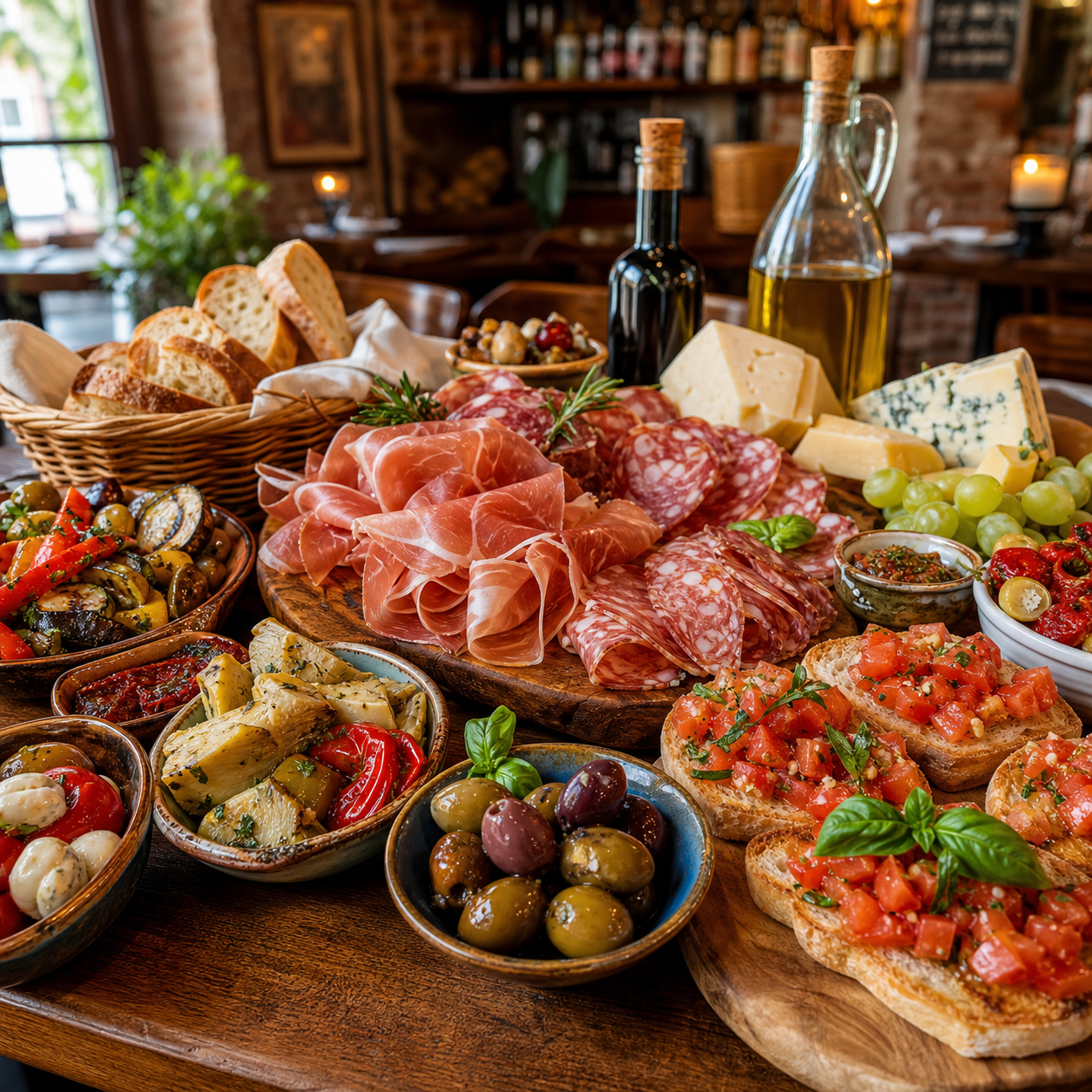
Antipasti introduce the character of an Italian meal before the first forkful of pasta arrives. A well-composed selection brings together savory cured meats, creamy Italian cheeses, bright vegetables, crisp bread, and regional specialties, giving diners time to settle in, share, and enjoy the table.
What Are Antipasti?
Antipasti are traditional Italian starters served before the primi and secondi courses. The singular is antipasto, while antipasti is the plural used for a selection of several small dishes or ingredients.
The word combines anti, meaning before, with pasto, meaning meal. That description explains their place in Italian cuisine, although antipasti are more than a formal course. They create a welcoming pause at the beginning of dinner, often encouraging conversation and shared tasting.
Antipasti may be served cold, at room temperature, or hot. A plate might include prosciutto, salami, aged cheese, marinated vegetables, and olives, while another could focus on seafood, fried specialties, or grilled vegetables. Unlike a single fixed recipe, antipasti describe a broad style of preparation and service.
They also differ from the later courses. Primi usually include pasta, risotto, or soup; secondi center on meat or fish. Antipasti are generally smaller and more varied, designed to awaken the appetite rather than replace the meal.
The Essential Elements of a Traditional Antipasti Plate
A traditional antipasti plate balances salty, creamy, crisp, fresh, tangy, and savory elements. The strongest selections combine a few high-quality ingredients rather than crowding the table with unrelated foods.
Cured meats are often the savory foundation. Prosciutto di Parma, mortadella, bresaola, and regional salumi offer different textures and levels of seasoning. Thinly sliced prosciutto feels delicate and silky, while salami contributes firmer texture and a more pronounced spice profile.
Italian cheeses provide contrast. Fresh mozzarella, burrata, pecorino, Parmigiano Reggiano, gorgonzola, and fontina can bring creaminess, salt, sharpness, or gentle sweetness. Pairing a soft cheese with an aged one gives diners a clear progression of flavor.
- Marinated vegetables: artichokes, peppers, eggplant, mushrooms, and zucchini add acidity and color.
- Bread: toasted country bread, grissini, crostini, and focaccia carry toppings and absorb flavorful juices.
- Olives and pickles: these provide briny, sharp notes that refresh the palate between richer bites.
- Seafood: anchovies, octopus, sardines, or lightly dressed shrimp suit coastal traditions.
- Condiments: quality olive oil, balsamic vinegar, pesto, preserves, and pepper-based sauces add finishing accents.
Olive oil deserves special attention. A fruity extra-virgin olive oil can connect bread, vegetables, and cheese, but it should support the ingredients rather than disguise them. Seasonality matters too: ripe tomatoes in summer, roasted peppers in late summer, and earthy mushrooms in autumn each give an antipasti selection a stronger sense of place.
Classic Italian Antipasti to Know
Classic Italian antipasti include bruschetta, caprese salad, prosciutto with melon, marinated vegetables, arancini, and carpaccio. Each dish highlights a different technique, from grilling and marinating to frying or thin slicing.
Bruschetta and crostini
Bruschetta begins with grilled or toasted bread rubbed with garlic and finished with olive oil. The familiar tomato version combines ripe tomatoes, basil, seasoning, and sometimes a touch of vinegar. Crostini are usually smaller and may carry ricotta, mushrooms, chicken liver pâté, or seafood. The key is contrast: crisp bread against a juicy or creamy topping.
Caprese salad
Caprese salad pairs tomatoes, mozzarella, basil, olive oil, and seasoning. Its appeal comes from restraint. When tomatoes are ripe and mozzarella is fresh, the dish needs little else. The colors also echo the Italian flag, though the practical pleasure is in the combination of sweet, milky, herbal, and fruity flavors.
Prosciutto with melon
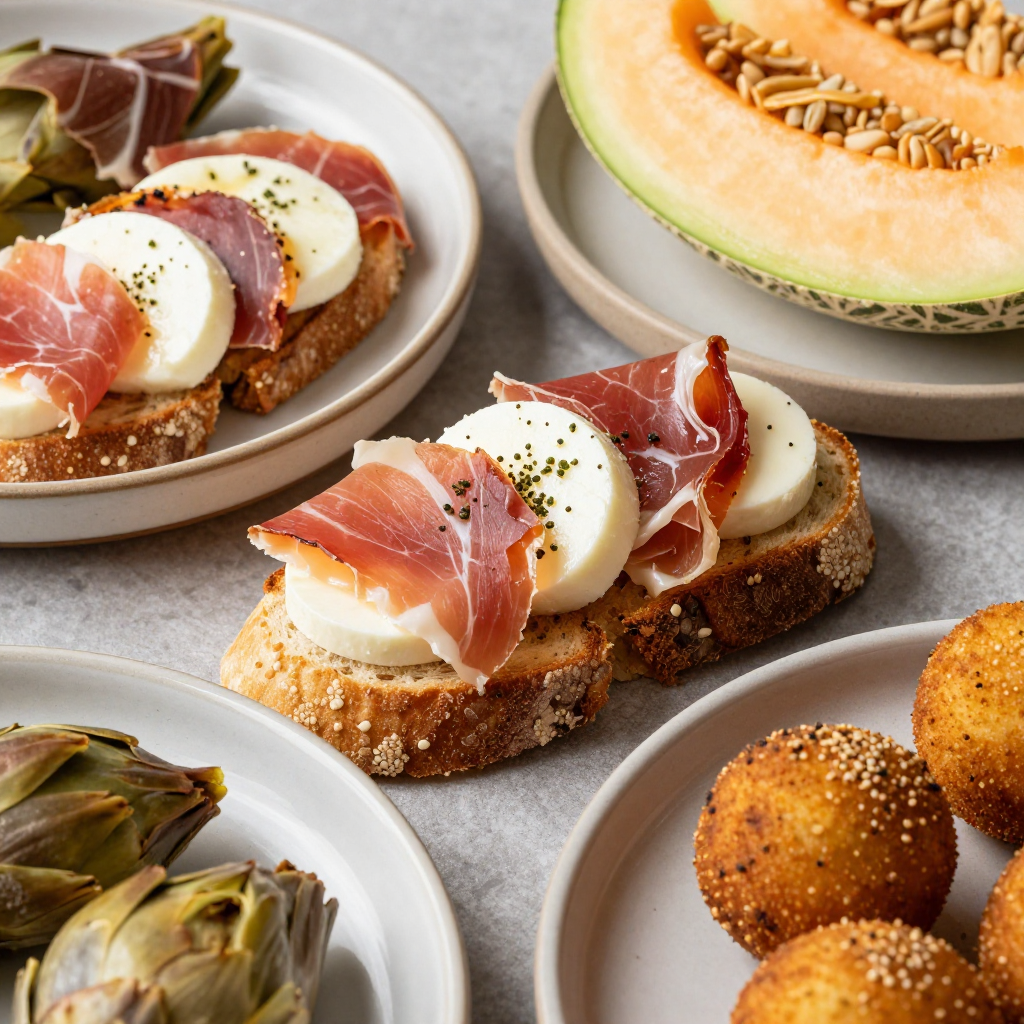
Prosciutto and melon offer a classic sweet-salty balance. The melon should be ripe and fragrant, while the prosciutto contributes a soft texture and savory depth. It is a simple pairing, yet it works because neither ingredient overwhelms the other.
Marinated vegetables
Marinated vegetables may include artichokes, eggplant, peppers, mushrooms, and zucchini. Vinegar or citrus supplies brightness, while herbs and olive oil add roundness. These vegetables are particularly useful on a shared plate because their acidity cuts through cheese and cured meats.
Arancini and carpaccio
Arancini are fried rice balls, commonly filled with ragù, mozzarella, or peas. They bring warmth and a crisp exterior to a plate otherwise dominated by sliced and marinated foods. Carpaccio, by contrast, consists of very thinly sliced raw beef or another carefully selected ingredient, often dressed with olive oil, lemon, pepper, and cheese. It is delicate, cold, and clean-tasting.
Regional Variations Across Italy
Regional Italian food shapes antipasti through local produce, climate, preservation methods, and culinary history. Northern, central, southern, and coastal traditions share the idea of a welcoming starter, but their ingredients and preparations can differ substantially.
Northern Italy
In northern regions such as Lombardy, Piedmont, Veneto, and Liguria, antipasti may feature creamy cheeses, mushrooms, polenta, river fish, veal, and delicate vegetable preparations. Ligurian tables may include focaccia and pesto, while Piedmont is known for refined meat and vegetable dishes such as vitello tonnato or peppers with anchovy sauce.
Central Italy
Tuscany, Umbria, and Lazio often emphasize rustic bread, beans, pecorino, cured pork, and grilled or marinated vegetables. Tuscan crostini, porchetta, and simple slices of country bread with olive oil reflect a preference for sturdy ingredients and clear flavors. Central Italian antipasti often feel generous without being elaborate.
Southern Italy
Southern regions bring tomatoes, eggplant, peppers, olives, capers, fresh cheeses, and bold herbs to the table. Fried specialties, stuffed vegetables, and dishes influenced by Mediterranean ingredients are common. In Sicily, arancini and caponata demonstrate how sweet, sour, crisp, and rich notes can coexist in one opening course.
Coastal traditions
Along the Ligurian, Adriatic, Tyrrhenian, and southern coasts, seafood antipasti may include marinated anchovies, octopus, sardines, prawns, and mussels. These dishes are often served with lemon, parsley, garlic, or olive oil. Regional variation is not a rigid rule: restaurants adapt recipes to the season, local supply, and the preferences of their guests.
How to Build a Balanced Antipasti Selection
To build a balanced antipasti selection, choose contrasting flavors, textures, colors, temperatures, and portion sizes. A practical formula is to select one item from each of five groups: cured meat, cheese, vegetable, bread-based bite, and a bright or briny accent.
- Begin with the centerpiece. Choose a signature item such as burrata, prosciutto, carpaccio, grilled seafood, or a regional specialty.
- Add texture. Combine silky meat or cheese with crisp crostini, toasted bread, fried arancini, or crunchy grissini.
- Bring acidity. Marinated vegetables, pickles, citrus, or lightly dressed salad prevent the selection from feeling heavy.
- Balance intensity. Place mild mozzarella beside a stronger pecorino or gorgonzola, rather than choosing several equally salty items.
- Check the colors. Tomatoes, leafy herbs, peppers, olives, pale cheeses, and golden bread make the plate inviting before anyone tastes it.
For a shared starter, allow roughly 80 to 120 grams of food per person when a full meal follows. If antipasti are the main focus, increase that amount and include more substantial options. At a restaurant, two or three varied items can suit two diners before pasta, while a larger mixed platter works well for four or more people.
A useful rule is three contrasts, two anchors, one surprise: three changes in texture or flavor, two dependable favorites such as prosciutto and mozzarella, and one less familiar regional dish. This keeps the order approachable while leaving room for discovery.
Serving Antipasti at an Italian Restaurant or at Home
Serve antipasti in a relaxed sharing sequence, beginning with lighter flavors and moving toward richer or warmer dishes. Present cold meats and cheeses first, then bring out fried items, grilled vegetables, or hot seafood while they are at their best.
At an Italian restaurant, ask how many people a platter serves and whether it is designed as a first course or a substantial shared plate. Mention dietary preferences clearly, especially when a selection includes nuts, seafood, raw meat, or dairy. A server can often adjust the balance without compromising the regional character.
At home, take ingredients out of the refrigerator before serving when appropriate, allowing cheese and cured meats to develop their aroma. Keep delicate foods away from hot dishes, use small plates for sharing, and add bread and olive oil separately so the table remains easy to navigate.
Wine pairings should follow the strongest flavor on the plate. Prosecco or another dry sparkling wine suits fried foods and salty cured meats; a crisp Pinot Grigio or Vermentino works with seafood and vegetables; Chianti or Barbera can stand up to richer meats and aged cheese. For non-alcoholic options, sparkling water with lemon, bitter aperitivo-style sodas, or unsweetened iced tea provide refreshing contrast.
Do not force a single pairing across every item. Choosing a full-bodied red for delicate Caprese salad may hide the tomatoes and mozzarella, while a very light drink can disappear beside aged cheese or salami. The best service gives each ingredient enough room to speak.
Frequently Asked Questions About Italian Antipasti
What is the difference between antipasto and antipasti?
Antipasto is singular and refers to one starter or dish. Antipasti is plural and describes two or more Italian starters or a mixed selection.
What foods are traditionally included in antipasti?
Traditional antipasti may include cured meats, Italian cheeses, marinated vegetables, olives, bread, focaccia, seafood, bruschetta, Caprese salad, carpaccio, and fried specialties such as arancini.
Are antipasti served hot or cold?
They can be hot, cold, or served at room temperature. Bruschetta, cheeses, and marinated vegetables are often cool or ambient, while arancini, grilled vegetables, and some seafood preparations are served warm.
How many antipasti should be ordered or served per person?
For a meal with primi and secondi, plan on about 80 to 120 grams per person, or two to three shared choices for a small group. Order more if antipasti will be the main meal.
What drinks pair well with Italian antipasti?
Dry sparkling wine, crisp white wine, light reds, sparkling water, and bitter non-alcoholic aperitivo drinks pair well. Match the drink to the dominant ingredient and use acidity to balance salty, fried, or creamy foods.
Antipasti invite diners to experience Italian cuisine through small, carefully chosen moments. Whether you order a regional platter at an Italian restaurant or assemble one at home, focus on seasonality, quality, and contrast. The result should feel generous, social, and distinctly connected to the ingredients on the plate.