The History of Authentic Italian Pizza: From Naples to Global Fame
Few foods carry as much cultural weight as pizza. What began as humble sustenance on the streets of Naples has become one of the most recognized dishes on earth — yet its soul remains deeply, specifically Italian. Understanding that journey changes how you experience every bite.
The Ancient Roots — Flatbreads Before Pizza
Pizza as we know it did not emerge from a vacuum. Long before Naples, Mediterranean civilizations were baking flatbreads topped with oil, herbs, and local ingredients. Ancient Greeks, Romans, and Egyptians all had versions of seasoned flatbread cooked on hot stones — practical, filling, and adaptable to whatever was available.
The Romans brought a version called panis focacius across their empire, and traces of this tradition persisted through the medieval period in southern Italy. These early flatbreads were not pizza in any recognizable sense, but they established a culinary logic: thin dough, high heat, simple toppings. That logic would eventually converge with one transformative ingredient — the tomato, arriving from the Americas in the 16th century — to create something entirely new.
It took another century before Neapolitans embraced the tomato as food rather than ornament. When they did, modern pizza was born.
Naples: Where Modern Pizza Was Born
Naples in the 17th and 18th centuries was a densely populated, vibrantly chaotic city — and pizza was its street food. The dish fed the lazzaroni, the city's working poor, who needed something cheap, fast, and eaten on the move. Vendors called pizzaioli sold slices from trays balanced on their heads, and small pizzerias began appearing in the city's narrow streets.
This was not yet the refined craft it would become. Early Neapolitan pizza was rustic: stretched dough, tomato, salt, a drizzle of oil. Pizza marinara — topped simply with tomato, garlic, oregano, and olive oil — is the oldest documented version, named not for fish but for the fishermen's wives who prepared it when the boats came in. It predates even the Margherita and remains a benchmark of Neapolitan simplicity.
By the early 19th century, pizza had become so embedded in Neapolitan life that visiting nobles reportedly sneaked out of royal residences to eat it incognito. The city and the dish were inseparable.
The Margherita Moment — Pizza Gets Its Identity
The story of Margherita pizza is part history, part legend — and entirely central to how pizza acquired its national identity. In June 1889, Queen Margherita of Savoy visited Naples with King Umberto I. The royal household summoned Raffaele Esposito, one of the city's most celebrated pizzaioli, to prepare several varieties for the queen.
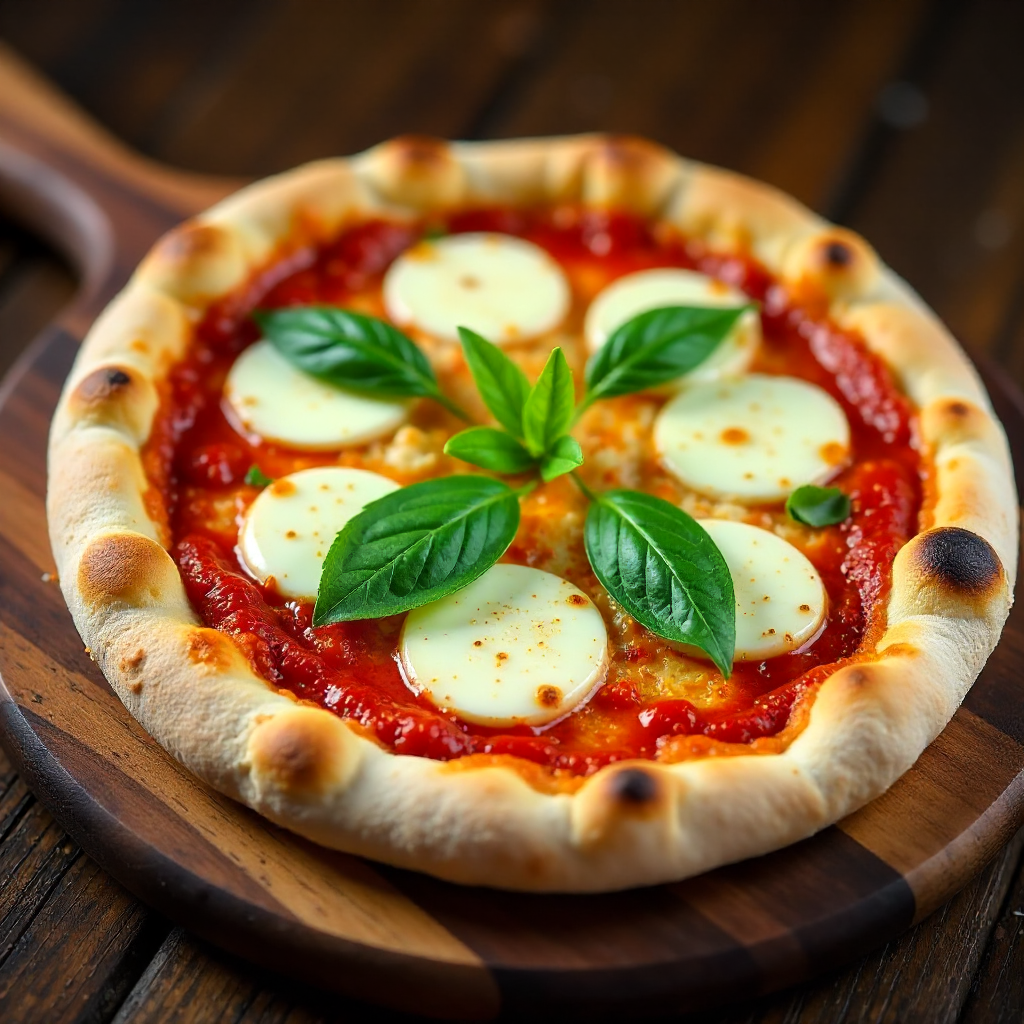
She favored one above the others: tomato, fior di latte mozzarella, and fresh basil — the red, white, and green of the newly unified Italian flag. Esposito named it in her honor. Whether the patriotic color symbolism was intentional or retrospective, the story stuck, and with it the idea that pizza was not just street food but a dish worthy of national pride.
That moment did something important beyond the anecdote. It fixed a visual and flavor template that has defined authentic Neapolitan pizza ever since: restraint, balance, the interplay of acid tomato against creamy cheese against fresh herb. Everything since has been a variation on that logic.
The Craft Behind Authenticity — Ingredients and Technique
Authentic Neapolitan pizza is defined by specific ingredients and a specific process — not as arbitrary rules, but because each element was refined over generations to produce a particular result.
The dough begins with "00" flour, a finely milled Italian wheat that creates the characteristic soft, slightly chewy texture. It is mixed with water, salt, and a small amount of yeast, then left to ferment slowly — often 24 hours or more. That slow fermentation develops flavor and creates the airy, blistered crust that no rushed process can replicate.
The tomato sauce uses San Marzano tomatoes, grown in the volcanic soil near Mount Vesuvius. Their low acidity and dense flesh produce a sauce that is sweet and bright without bitterness — a quality that generic canned tomatoes simply cannot match. The cheese is either fior di latte (fresh cow's milk mozzarella) or buffalo mozzarella from Campania, both prized for their moisture content and clean, milky flavor.
Then there is the oven. A wood-fired oven — forno a legna — reaches temperatures of 430–480°C (800–900°F). At that heat, a Neapolitan pizza cooks in 60 to 90 seconds. The crust chars at the edges, the center stays soft, and the toppings barely cook rather than bake. An electric oven set to 250°C produces a fundamentally different product, regardless of ingredient quality.
Each of these elements is interconnected. Change one, and the balance shifts. That is why authenticity here is not nostalgia — it is engineering.
How Italian Immigration Took Pizza to the World
Pizza left Italy in the hands of its people. Between the 1880s and 1920s, millions of Italians emigrated — to the United States, Argentina, Brazil, and across Europe — carrying their food culture with them. The first pizzerias outside Italy opened in immigrant neighborhoods: New York's Lombardi's, founded in 1905, is often cited as the first in the United States.
These early immigrant pizzerias were acts of cultural memory as much as commerce. Italian immigration created communities that kept Neapolitan traditions alive, even as the dishes adapted to local ingredients and tastes. American flour behaved differently from Italian "00" flour. Local tomatoes replaced San Marzano varieties. Mozzarella was modified for mass production.
The adaptations produced new styles — New York's thin, foldable slices, Chicago's deep dish, the countless regional variations that now populate the global pizza landscape. These are legitimate culinary traditions in their own right. But they diverged from the Neapolitan original, and that divergence is precisely why the original needed protecting.
Protecting the Tradition — AVPN and UNESCO Recognition
The Associazione Verace Pizza Napoletana (AVPN), founded in Naples in 1984, exists to define and certify what authentic Neapolitan pizza actually is. Its standards cover everything from flour type and fermentation time to oven temperature and the diameter of the finished pizza (no more than 35 cm). Restaurants that meet these criteria can display the AVPN certification — a meaningful signal in a world where the word "Neapolitan" is often applied loosely.
In 2017, UNESCO added "the art of Neapolitan pizzaiuolo" to its Representative List of the Intangible Cultural Heritage of Humanity. The recognition was notable because it focused not on the pizza itself but on the craft — the knowledge, skill, and cultural identity embedded in the act of making it. UNESCO described it as a social practice tied to Neapolitan identity, passed from master to apprentice over generations.
That framing matters. It positions the pizzaiolo as a cultural custodian, not just a cook. And it gives institutional weight to the argument that technique and tradition are not interchangeable with convenience and approximation.
From Naples to Your Table — Why Authenticity Still Matters
History is only useful if it changes how you engage with the present. When you sit down at a restaurant that uses San Marzano tomatoes, sources proper buffalo mozzarella, and fires its pizzas in a wood-burning oven, you are not paying a premium for marketing. You are tasting the outcome of centuries of refinement.
The difference is perceptible. The crust has a lightness and char that no conveyor-belt oven produces. The sauce has a sweetness that comes from soil chemistry, not sugar. The cheese melts in a way that reflects its moisture content and freshness. These are not abstract qualities — they are the direct result of specific choices that trace back to Naples in the 18th century.
Choosing a restaurant that honors these traditions is also, in a small way, participating in their preservation. The AVPN's certification network, the UNESCO recognition, the pizzaioli who train for years to master their craft — all of it depends on diners who understand what they are eating and why it matters.
Pizza has traveled far from the streets of Naples. The best versions of it never really left.
Frequently Asked Questions
What is the difference between Neapolitan pizza and other Italian pizza styles?
Neapolitan pizza is defined by its soft, thin center, puffy charred crust, and minimal toppings — cooked at extreme heat for under two minutes. Other Italian styles, like Roman pizza (pizza al taglio) or Sicilian pizza, use different dough hydrations, baking methods, and topping approaches. They are distinct regional traditions, not inferior versions of the same thing.
Why are San Marzano tomatoes considered essential for authentic pizza?
San Marzano tomatoes are grown in a specific volcanic region near Naples and have a naturally low acidity and thick flesh that produces a balanced, sweet sauce. The DOP (Protected Designation of Origin) certification ensures geographic and quality standards. Substitutes can produce good results, but the flavor profile differs noticeably from the original.
What does it mean for a pizza to be "AVPN certified"?
AVPN certification means a restaurant has been inspected and verified to meet the Associazione Verace Pizza Napoletana's strict standards for ingredients, dough preparation, oven type, and cooking technique. It is one of the most reliable indicators that a pizzeria is producing genuinely traditional Neapolitan pizza rather than a stylistic approximation.
When did pizza become popular outside of Italy?
Pizza spread internationally through waves of Italian immigration beginning in the late 19th century, with the first documented pizzerias appearing in the United States around 1905. Its global popularity accelerated significantly after World War II, as American soldiers who had been stationed in Italy returned home with a taste for the dish.
Is Neapolitan pizza really a UNESCO heritage food?
Yes. In December 2017, UNESCO inscribed the "art of Neapolitan pizzaiuolo" on its Intangible Cultural Heritage list. The recognition honors the craft and cultural practice of pizza-making in Naples — the skills, rituals, and community identity bound up in the tradition — rather than the pizza as a product.