The Science Behind Perfect Risotto: Techniques and Tips

Good risotto gets its creamy texture from the rice itself, not from a heavy pour of cream. The cook coaxes starch from the grains while adding liquid in stages, then finishes the dish so it flows softly onto the plate. Understanding the cause and effect behind each step makes risotto easier to cook at home, whether you prefer a classic Parmesan version or a seasonal variation.
Why risotto rice matters
Arborio and Carnaroli rice are short-grain varieties with enough surface starch to thicken the cooking liquid while retaining a tender, distinct center. Choosing the right rice gives risotto its characteristic creaminess and helps the grains stay pleasantly firm.
As rice cooks, heat and moisture soften its outer layers. Movement and contact with liquid help some of the starch disperse into the pan, forming a silky sauce around the grains. The starch-rich coating creates creaminess; the inside of each grain should still have structure.
Arborio is widely available and releases starch readily, which can make it forgiving but also easier to overcook. Carnaroli has a reputation for holding its shape well, so it offers a wider window for achieving an al dente center. Both work. The practical choice depends on availability, the texture you like, and how closely you can monitor the pan.
Keep rice dry and avoid rinsing it before cooking. Rinsing removes some of the surface starch that helps create the sauce. Use the rice as it comes from the package, and plan to cook it until tender with a slight bite rather than relying on a fixed time alone.
Build flavor from the first step
A flavorful risotto begins with a gently cooked soffritto, followed by a brief toast of the rice. These early steps establish the dish’s aromatic base and help the grains cook more evenly.
Warm finely chopped onion or shallot in olive oil, butter, or a combination over medium-low heat. The goal is to soften it without browning: browned edges can add a stronger, sweeter flavor that may distract from delicate ingredients such as asparagus or seafood. A little salt helps draw moisture from the onion, but keep in mind that stock and cheese will add more seasoning later.
Add the rice and stir for a minute or two, until the grains are hot and their edges look slightly translucent. This brief toasting step coats the grains in fat and warms them before liquid goes in. It does not seal the rice or prevent it from absorbing stock; rather, it gives the cook a controlled start and helps the grains heat evenly.
If using wine, add a modest splash after toasting and let it mostly evaporate before adding stock. That way, its acidity and aroma become part of the base instead of leaving a raw, sharp taste in the finished risotto.
Add stock gradually
Warm stock and gradual ladling help risotto cook at a steady pace. Add enough stock to keep the rice moist, then wait until much of it has been absorbed before adding more.
Keep stock in a separate saucepan at a gentle simmer. Cold stock can cool the rice and interrupt cooking, while very rapid boiling may make the liquid evaporate before the grains have time to absorb it. The aim is steady heat, not a hard boil.
Add a ladleful or two at a time, stirring and watching the pan. When you draw a spoon across the bottom, the trail should remain briefly before liquid flows back to fill it. Add more stock at that point. The rice should never sit dry for long, but it also should not be submerged in a large pool throughout cooking.
This method gives you control over both texture and timing. Rice variety, pan width, burner strength, and the stock itself all affect how much liquid the dish needs. Treat any recipe quantity as a guide, and keep a little extra warm stock available in case the grains need more time.
Stir for texture, not just tradition
Stirring helps release starch and cooks the rice evenly, but constant, vigorous stirring is not required. Regular, gentle movement is enough to keep grains from sticking and encourage a creamy sauce.
In a home kitchen, stir more often when the pan is wide, the heat is high, or the rice is nearing the bottom of its stock. You can pause briefly while the rice simmers, then stir as you add liquid and check its progress. The useful cue is what the rice is doing: if it sticks, catches, or cooks unevenly, increase your attention or lower the heat.
Restaurant cooks often use broad pans and work quickly because they are managing several portions and service timing. At home, a heavy saucepan or sauté pan and a steady pace are usually more useful than trying to imitate nonstop motion. Vigorous stirring can break grains and make the texture gluey, especially with rice that already releases starch readily.
Think of stirring as a texture adjustment. More movement can produce a silkier, thicker sauce; less movement preserves more separation between grains. Neither is automatically better. Use enough stirring to keep the rice cooking evenly, then let the final consistency guide your choice.
Know when the rice is done
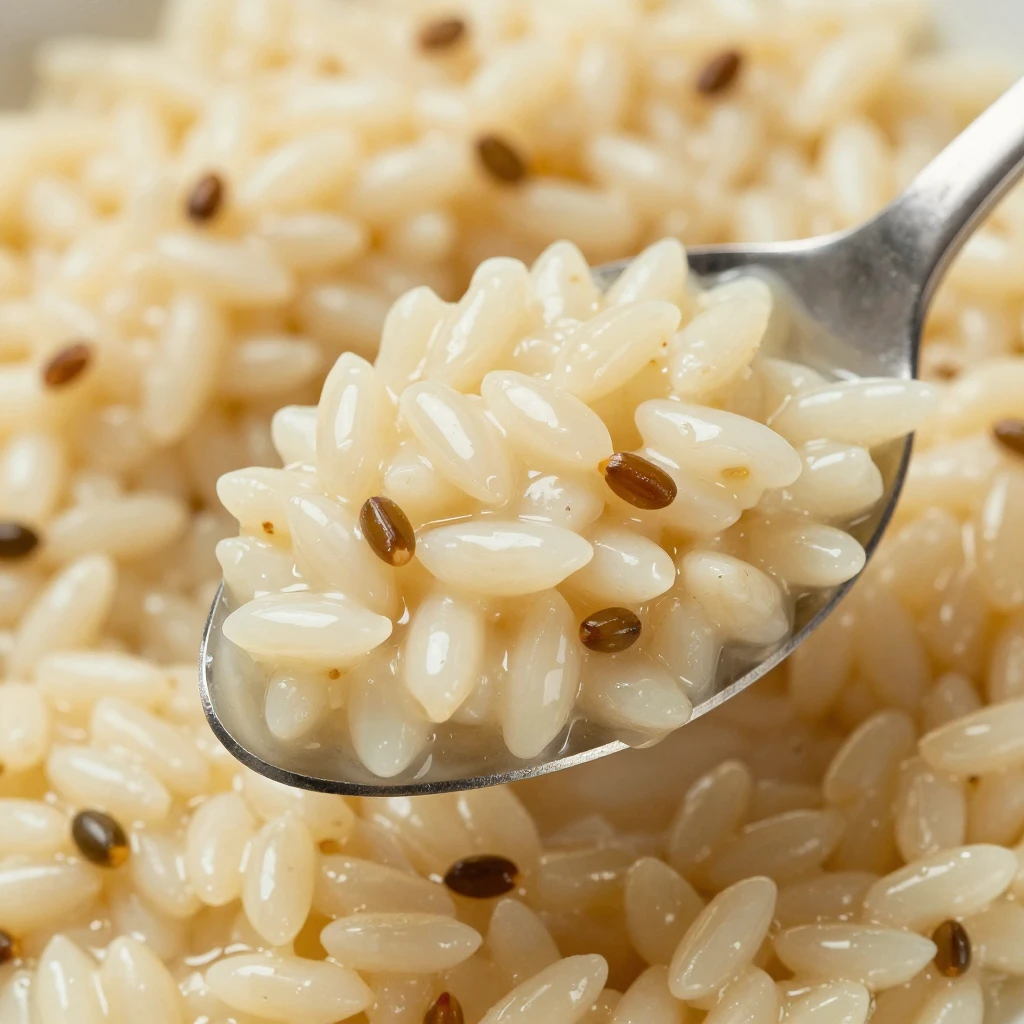
Risotto is done when the rice is tender but still has a slight, resilient bite at the center, and the sauce moves loosely around the grains. This al dente texture is easier to judge by tasting than by the clock.
Begin tasting a few minutes before the cooking time suggested on your rice package. Take a grain from the center of the pan and bite it: it should not have a hard, chalky core, but it should not collapse into softness either. If it is still firm, add warm stock and continue cooking in short intervals.
Check the consistency as well as the bite. Risotto thickens quickly as it sits, so it should look a little looser in the pan than you want on the plate. When you tilt the pan, the rice should shift in a soft wave rather than hold a stiff mound. If a spoonful lands as a dense pile, loosen it with a small amount of warm stock before serving.
Finish with mantecatura
Mantecatura is the final mixing of fat and cheese into risotto, usually off the heat. This step creates a cohesive, glossy finish and helps the sauce cling to the rice.
Once the grains are cooked and the risotto is slightly loose, remove the pan from the burner. Add cold butter and finely grated Parmesan or another suitable hard cheese, then stir or gently toss until the fat emulsifies into the starchy liquid. Give the pan a brief rest before serving; a minute is often enough.
Keep the proportions restrained at first. Too much butter or cheese can make the dish heavy and mask the rice’s flavor. Taste before adding extra salt, since stock and aged cheese may already provide plenty. For variations, cooks may use olive oil, omit dairy, or finish with ingredients such as herbs, lemon zest, or a vegetable purée. The finish should suit the dish rather than follow one inflexible rule.
Serve risotto promptly. It continues to absorb liquid as it waits, so a consistency that looks perfect in the pan can become too thick on the table.
Troubleshoot common risotto problems
Most risotto problems can be corrected by adjusting heat, stock, or cooking time. Check the rice’s bite and the sauce’s movement before making a change.
- Gummy or mushy: The rice may be overcooked, stirred too aggressively, or cooked with too much liquid at once. You cannot restore a grain that has broken down, but you can stop cooking and fold in a little fresh stock or a suitable finishing ingredient to improve the texture. Next time, lower the heat and begin tasting earlier.
- Too firm or chalky: The center needs more time. Add warm stock a little at a time and continue cooking gently, tasting every minute or two. Do not add cold liquid or turn the heat up sharply to rush it.
- Too thick: Stir in warm stock, a splash at a time, until the risotto flows softly. Do this just before serving, since the rice will continue to thicken as it rests.
- Too soupy: Simmer briefly while stirring gently so some liquid evaporates, then reassess. Avoid trying to fix it with a large amount of cheese or butter, which can make the sauce greasy rather than balanced.
For leftovers, cool risotto promptly and refrigerate it in a covered container. Reheat it gently in a pan with a splash of stock or water, stirring until hot; the original al dente texture may soften, but added liquid can restore some creaminess. For a different result, chilled risotto can be shaped into patties or used for rice balls.
Frequently asked questions
Which rice is best for risotto?
Arborio is easy to find and makes a creamy risotto; Carnaroli tends to hold its shape well and offers a little more room before it turns soft. Either is a sound choice if you monitor doneness.
Should you stir risotto constantly?
No. Stir regularly to move the grains, distribute heat, and release starch, but constant vigorous stirring can break the rice and is unnecessary in most home kitchens.
Why should the stock be warm?
Warm stock keeps the pan at a steadier cooking temperature. Cold stock can slow cooking each time it is added, making it harder to judge doneness consistently.
How do you know when risotto is done?
Taste a grain: it should be tender with a slight bite at the center. The sauce should flow around the rice rather than look dry or form a stiff mound.
Can risotto be reheated?
Yes. Reheat it gently with a splash of stock or water, stirring until hot. It may be softer than freshly cooked risotto, but added liquid helps bring back a creamy consistency.